
 More
MoreElectric Scooter Charging Time: Factors That Affect Speed and Efficiency
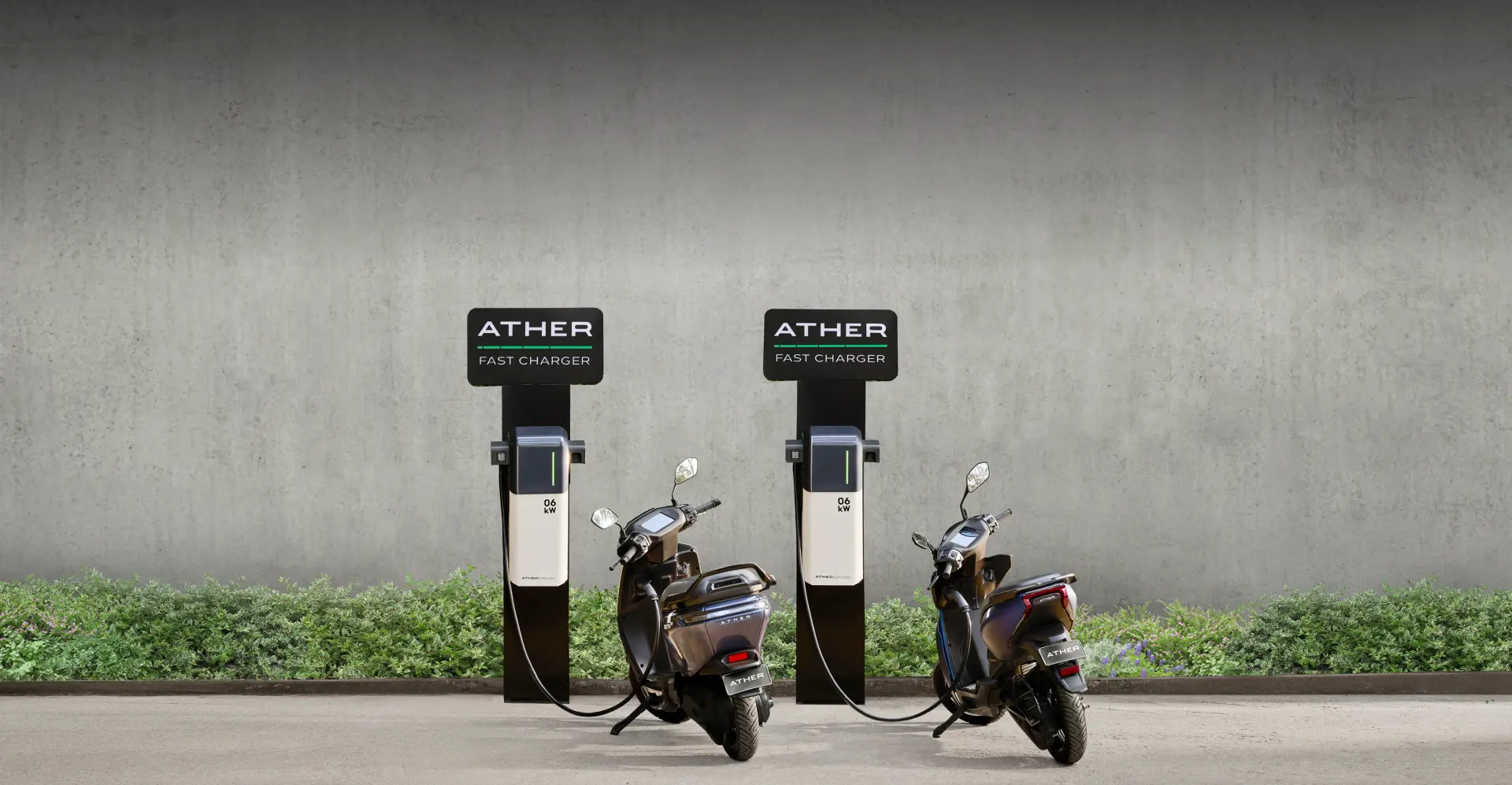
Introduction
Electric scooter charging time depends on a mix of vehicle hardware, charger type, and surrounding conditions. While most electric scooters in India charge fully in 4 to 6 hours on a home socket, real world charging speed often varies based on battery size, temperature, and even the quality of your power supply. Understanding these factors helps riders plan better, charge smarter, and extend battery life.
Summary:
- Most electric scooters take 4 to 6 hours to fully charge on a standard home socket.
- Fast chargers can deliver 0 to 80 percent in under an hour where supported.
- Charger type, battery size, temperature, and battery health are the biggest factors.
- Charging slows down past 80 percent by design to protect the battery.
- Avoiding common mistakes like charging immediately after a long ride helps extend battery life.
How Long Does It Take to Charge an Electric Scooter?
Most electric scooters in India take between 4 to 6 hours to fully charge using a standard home socket, while fast charging stations can deliver 0 to 80 percent in 45 minutes to an hour. The exact time depends on battery capacity and the charger's power output.
- Home charging (AC): 4 to 6 hours for a full charge, depending on battery size.
- Fast charging (DC): Around 45 minutes to an hour for 0 to 80 percent.
- Battery size matters: A 3 kWh battery charges faster than a 4 kWh battery on the same charger.
Key Factors That Affect Charging Speed
What role does the charger type play?
The type of charger is the single biggest factor that determines charging speed. AC chargers are slower but gentler on the battery, while DC fast chargers push significantly more power directly into the battery.
- AC chargers typically deliver 0.65 kW to 1.5 kW for electric scooters.
- DC fast chargers can deliver 3 kW or more, dramatically reducing charge time.
- Compatibility check: Not every electric scooter supports DC fast charging.
How does battery capacity affect charging time?
Larger battery packs naturally take longer to charge because they store more energy. Charging time is roughly the battery's capacity divided by the charger's power output.
- Battery capacity is measured in kilowatt hours (kWh).
- A 2.9 kWh scooter takes less time than a 4 kWh scooter on the same charger.
- Bigger batteries are not slower; they simply hold more energy to fill.
What is an onboard charger and why does it matter?
The onboard charger is the unit inside your scooter that converts AC power from the wall into DC power for the battery. Its capacity sets the ceiling for AC charging speed, regardless of how powerful your wall socket is.
- A scooter with a 650 W onboard charger cannot pull more than 650 W from any AC source.
- DC fast charging bypasses the onboard charger entirely.
- This is why fast charging delivers much higher speeds where supported.
Does state of charge affect speed?
Charging speed slows down as the battery approaches 100 percent to protect the cells. This is why most fast charging sessions are rated only to 80 percent.
- The 20 to 80 percent range charges the fastest.
- The final 20 percent can take nearly as long as the first 60 percent.
- This tapering is a built in safety feature, not a malfunction.
Does battery age impact charging speed?
Older batteries charge slower and hold less energy due to natural cell degradation over hundreds of charge cycles. A battery at 80 percent of its original health may also accept current more slowly.
- Lithium ion batteries typically retain 70 to 80 percent capacity after 1,000 cycles.
- Frequent fast charging can accelerate this degradation.
- A healthy charging routine extends both range and charging performance.
External Conditions That Influence Charging Efficiency
How does temperature affect charging?
Both extreme heat and extreme cold slow down charging, since lithium ion cells perform best in a moderate temperature window of around 15 to 35 degrees Celsius.
- Hot batteries: The Battery Management System (BMS) limits current to prevent damage.
- Cold batteries: Chemical reactions inside cells slow down, reducing charge acceptance.
- Best practice: Let your battery cool down after a long or aggressive ride before plugging in.
Does power supply quality affect charging?
Low voltage or unstable home power supply can slow down charging significantly, even when your charger and battery are perfectly capable.
- A stable 15 amp socket is recommended for home charging.
- Loose wiring or shared circuits can reduce charging current.
- Voltage fluctuations are common in many Indian neighbourhoods and directly affect output.
What basic charging safety precautions should I follow?
- Always charge in a dry, well ventilated area.
- Avoid using extension cords in any condition.
- Charging in a covered location is recommended during heavy rains.
Common Charging Mistakes to Avoid
Should I charge my scooter immediately after a ride?
Avoid charging immediately after a long, fast ride since the battery is still hot and the BMS will limit charging current to protect the cells. Letting the battery rest improves both charging speed and long term battery health.
- Wait 15 to 20 minutes for the battery to cool down.
- This habit helps maintain peak charging performance over time.
Is it bad to fully drain the battery?
Letting the battery drop to 0 percent regularly puts unnecessary stress on lithium ion cells and shortens overall battery life. Keeping the charge between 20 and 80 percent is ideal for daily use.
- Avoid frequent deep discharges.
- Top up the battery before it falls below 20 percent.
- Reserve 100 percent charges for days with longer planned rides.
Is leaving the scooter plugged in overnight harmful?
Most modern electric scooters have built in safeguards that stop charging once the battery is full, so overnight charging is generally safe. However, repeatedly leaving it plugged in for very long periods can have minor long term effects on battery health.
- Modern chargers automatically cut off at 100 percent.
- Unplug after a few hours if you do not need a full charge.
- Overnight charging is fine when needed for an early ride.
Does using non standard chargers affect the battery?
Using non original or low quality chargers can deliver inconsistent voltage and damage the battery over time. Always use the charger supplied by the manufacturer.
- Cheap third party chargers may lack proper safety circuits.
- Mismatched voltage can trigger faults in the BMS.
- Stick to OEM approved charging accessories.
Should I fast charge every day?
Daily reliance on fast charging can accelerate battery degradation since high current charging generates more heat. Use it strategically rather than as a default option.
- Use fast charging for top ups during long rides.
- Rely on home AC charging for daily use.
- This balance preserves battery health while keeping you flexible.
Conclusion
Electric scooter charging speed is shaped by a combination of charger type, battery capacity, temperature, onboard hardware, and your charging habits. Knowing how each factor works lets you plan rides better, avoid surprises, and keep your battery healthy for years.
For most riders, a simple approach works best: charge overnight at home on a stable socket, use fast charging only when needed, and avoid charging right after a long ride. With these habits, your electric scooter will deliver consistent range and reliable charging performance well into its life.

 Sanya Sawlani5 min read
 Sanya Sawlani4 min read
 Chamundeswar Nadh Baratam4 min read
 Chamundeswar Nadh Baratam6 min read
 Sanya Sawlani5 min read
Wish to know more about Ather?
The best things about an Ather can’t be put in words, or captured in images. We’ll take up all your questions, just drop us your number. We’ll call you.
